Why SaaS Is Driving the Future of Software Development in 2026
By Tecvix • JAN 19, 2026
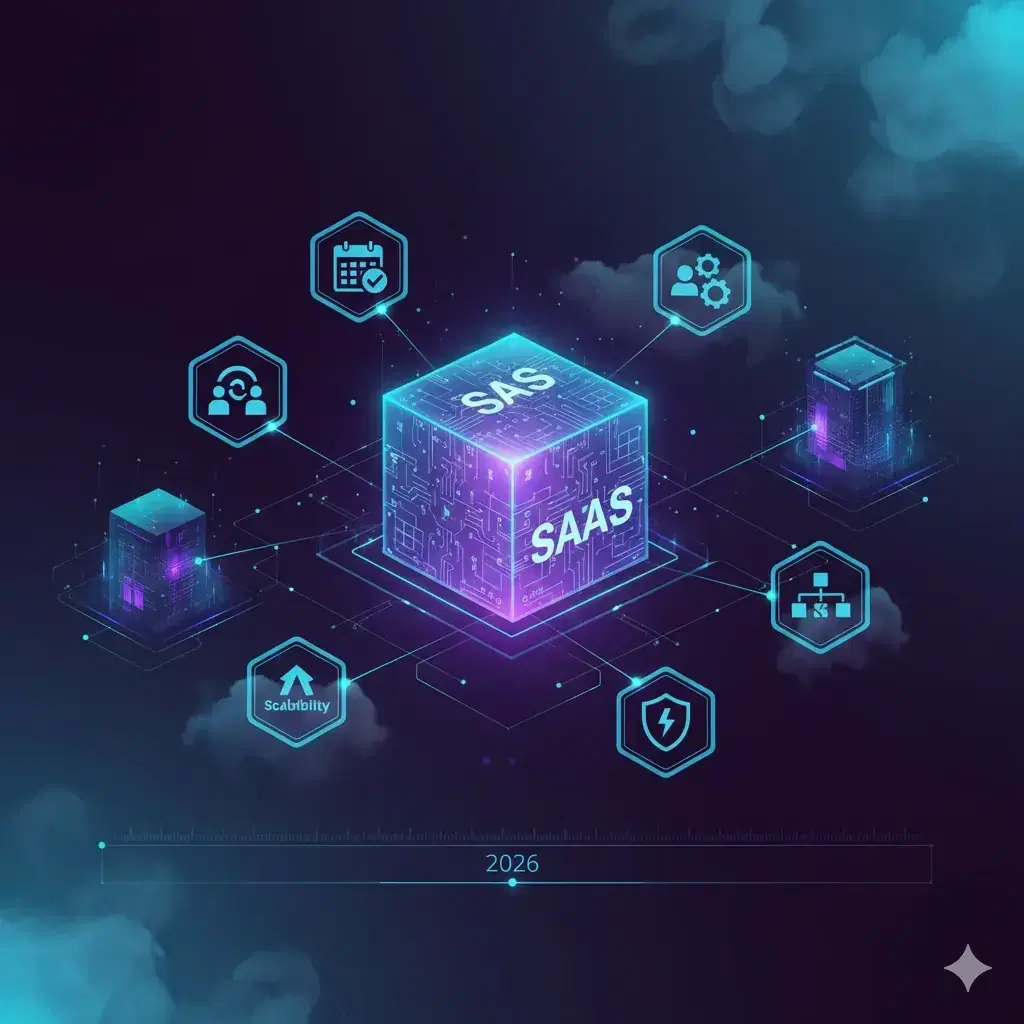
Software as a Service (SaaS) has moved beyond being just a simple delivery model. In 2026, it has become the very heartbeat of how we build and maintain technology.
The shift from traditional on-premises solutions to cloud-first SaaS platforms hasn't just changed the tools on our desktops; it has fundamentally altered the pace of our work. We've moved from long, isolated development cycles to a world of constant, seamless collaboration that happens in real-time across every continent.
Agility Without the Infrastructure Headache
One of the most liberating aspects of modern SaaS is how naturally it aligns with agile methodologies. In the past, developers spent a huge chunk of their time worrying about server maintenance or deployment hurdles. Today, those barriers are almost invisible.
Because SaaS platforms handle storage, server scaling, and infrastructure automatically, startups can launch an idea today and scale to a million users tomorrow without ever touching a physical server. This flexibility is what has democratized software building in 2026.
Breaking Down the Silos
SaaS has done something that years of management training couldn't: it broke down the walls between designers, engineers, and product managers. With integrated cloud-based tools, version control and issue tracking are no longer chores—they are part of a unified conversation.
We are also seeing a massive rise in low-code and no-code integrations within the SaaS ecosystem. This doesn't mean developers are becoming obsolete; rather, it means they are being freed from mundane tasks. When a marketing team can update a landing page or a sales team can automate a workflow through a SaaS tool, the engineering team is free to focus on the deep, complex logic that truly drives innovation.
Security by Default
Back in the early days, security was the biggest reason companies hesitated to move to SaaS. Now, enterprise-grade encryption and regulatory compliance are baked into the core of every reputable platform. Automatic updates mean we are no longer running on vulnerable, outdated versions.
Key Trends Defining This Year:
- ✦ AI-assisted debugging and code suggestions as a standard feature.
- ✦ Microservices architecture that makes systems truly modular.
- ✦ Seamless cross-platform experiences across Web, Mobile, and IoT.
- ✦ Data-driven product design influenced by real-time usage metrics.
The Bottom Line
In 2026, SaaS is not just about hosting software in the cloud—it is about redefining the spirit of creation. It has made us faster, more collaborative, and infinitely more scalable. For those of us building the future, SaaS isn't just a delivery model; it’s our most powerful collaborator.
Tecvix
Author